By Raine, Watershed Outreach & Education Coordinator
Our staff and volunteers have been busy keeping an eye on the beavers to see what they’ve been up to. Spring is such an exciting time, spent waiting in anticipation for when the beavers whose dams washed out will start to rebuild. Finally in April there was a flurry of activity!
Why do beavers build dams?
Beavers are semiaquatic animals, meaning they spend a lot of time in the water. They are very fast swimmers, so they are safer from predators when they are in or near the water. Beavers build dams to create areas of wide, deep water, so that they can safely swim from their home (bank den or lodge) to their food sources (trees and plants) rather than risking their lives by walking long distances on land.
Beavers wait to rebuild their dams
As you may recall, many beaver dams washed out during our winter storms. While some beaver dams on the upper Salinas River are able to last multiple years, many dams do wash out each year. Beavers then wait for the streamflow to go down before they start rebuilding. In our area, this tends to be around April or May.
How do they decide when to rebuild? Beaver behaviorist Jordan Kennedy studied this very question as a doctoral candidate. She studied beavers on the Blackfeet Nation Reserve, where beaver dams commonly wash out in summer due to snowmelt. Her research found that beavers listen to the sound of the water to determine when the stream velocity has gone down enough to start building new dams. Pretty cool!
Watch the growth of a new dam
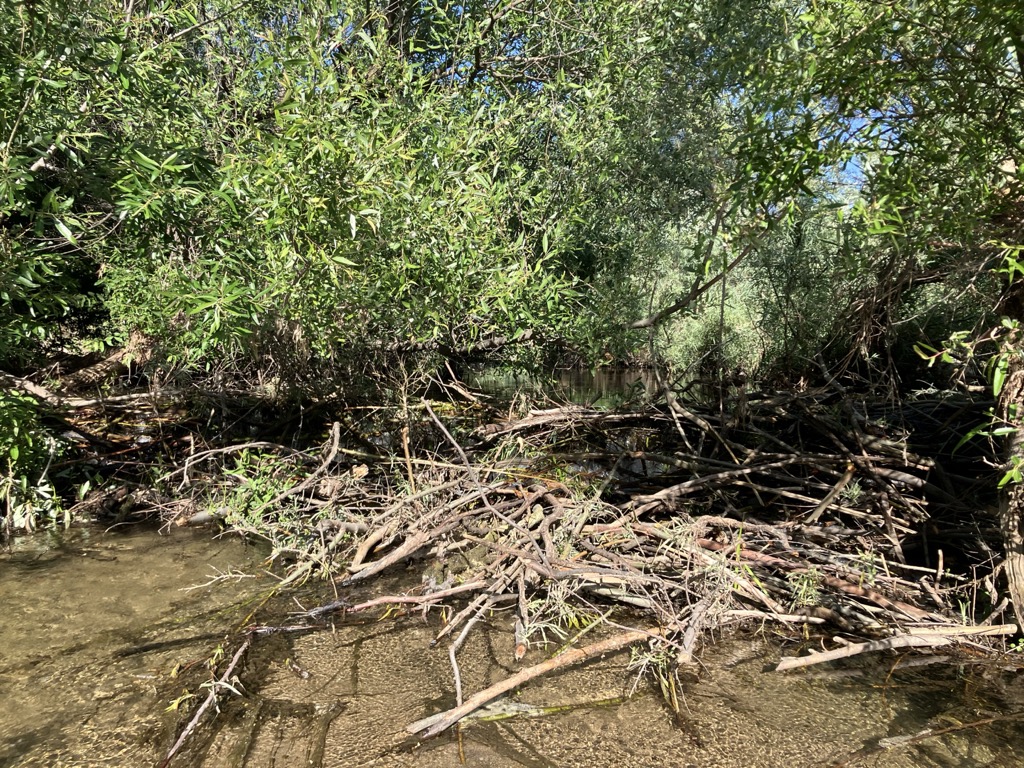
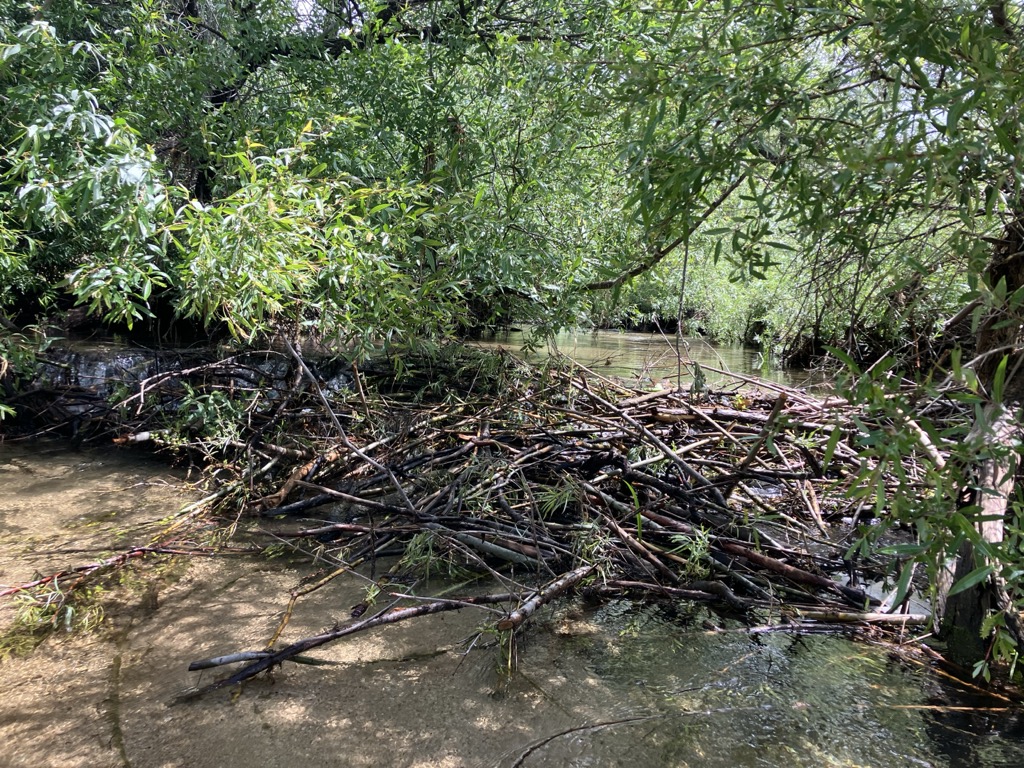
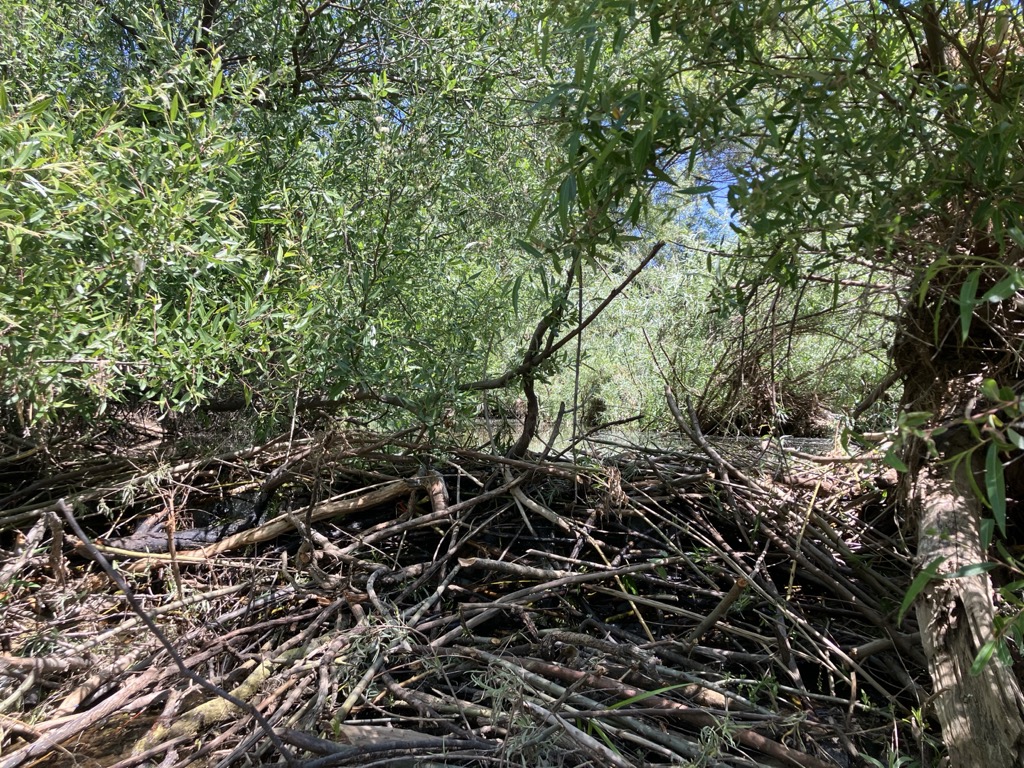
During the month of April, we saw new dams begin to pop up. Below you can see one beaver dam progress over the course of the month.



Beaver dams don’t block water, they just slow it down
The following video is a close-up of the beaver dam. This structure is sturdy enough to store water, but it has little gaps in it where water can still trickle and filter through to the downstream side. Think of this as a slow-release valve: rather than all the water rushing downstream at once, it is released incrementally. This means that water continues to flow all year round, rather than running out midway through the dry season.
Beaver dams create complex habitat
The stretch of river where the beavers built this dam is a relatively narrow area. When the beavers first build their dam, all the water that was flowing forward (downstream) is slowed down and now starts moving to the sides—the river is getting wider.
The beavers then add onto their dam, builting it longer and taller, as shown in the images above. As the dam gets built up, it stores more water, which causes the river to continue widening. New side channels form, and rather than being a simple, straight, fast-moving ‘highway of water,’ the river becomes a complex, meandering series of waterways that supports wetland plant and animal communities.
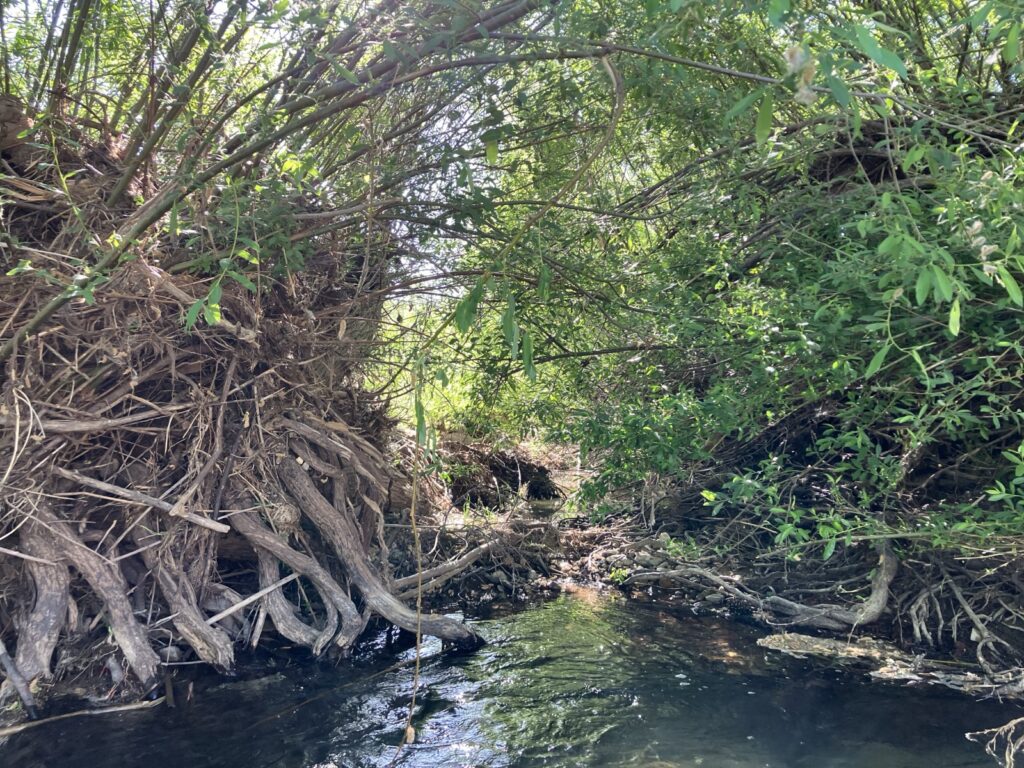
Below are side-by-side photos of an area just upstream of the new dam, where you can see how much the water level has increased. That’s safety for beavers and habitat for aquatic species!
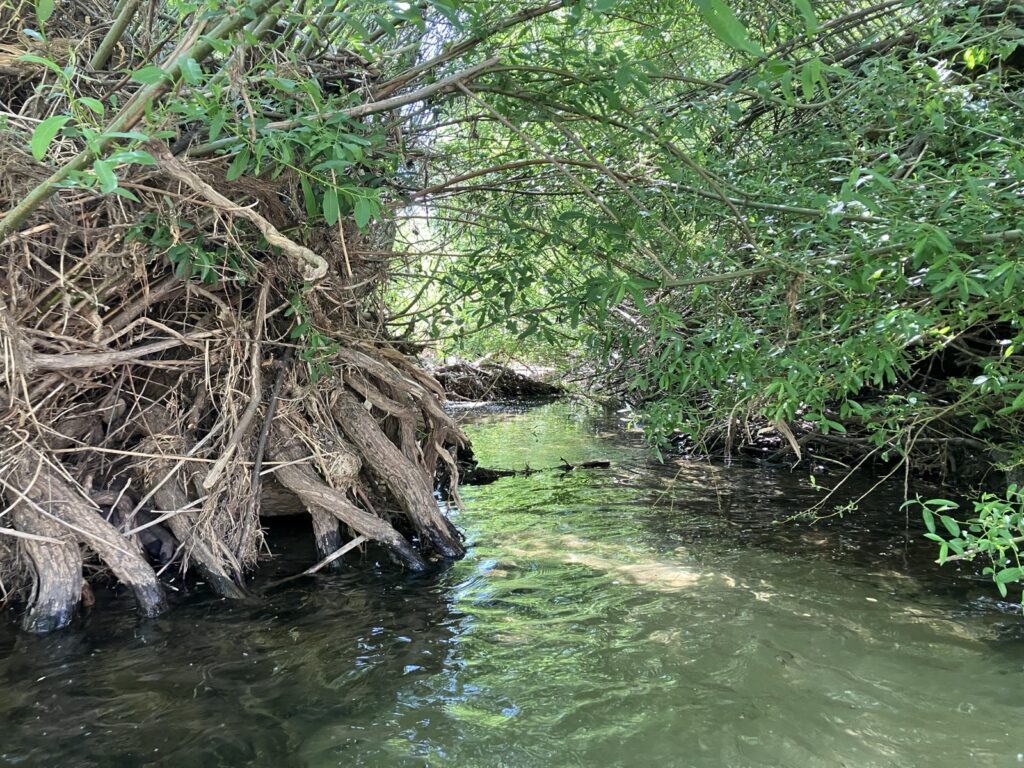
Side Channel: ACTIVATED
The water level has risen so much, the beavers recently caused the activation of a side channel about 100 ft upstream! This little stream meanders through a small wetland before reconnecting with the main channel about 20 ft downstream of the beaver dam.


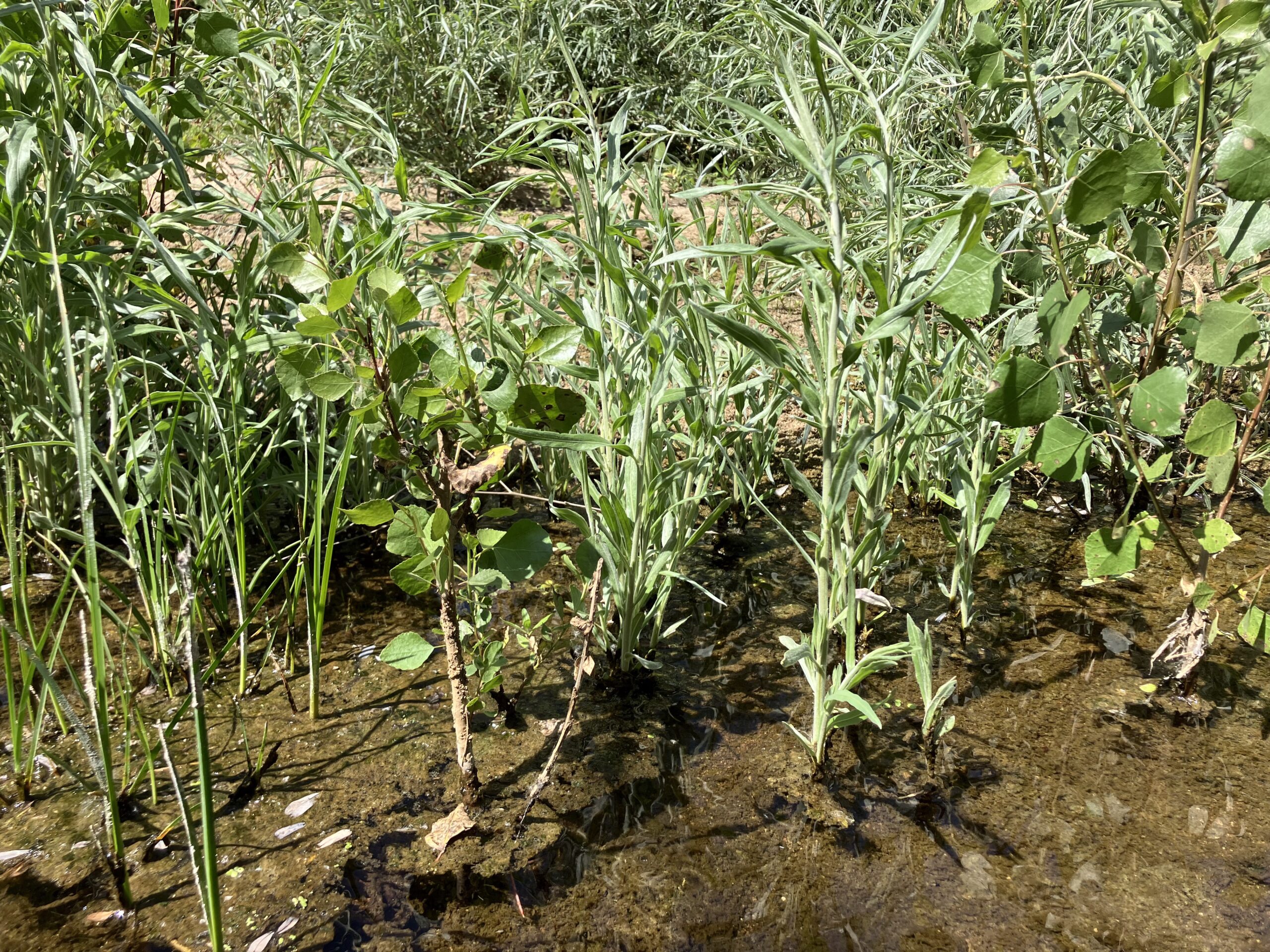
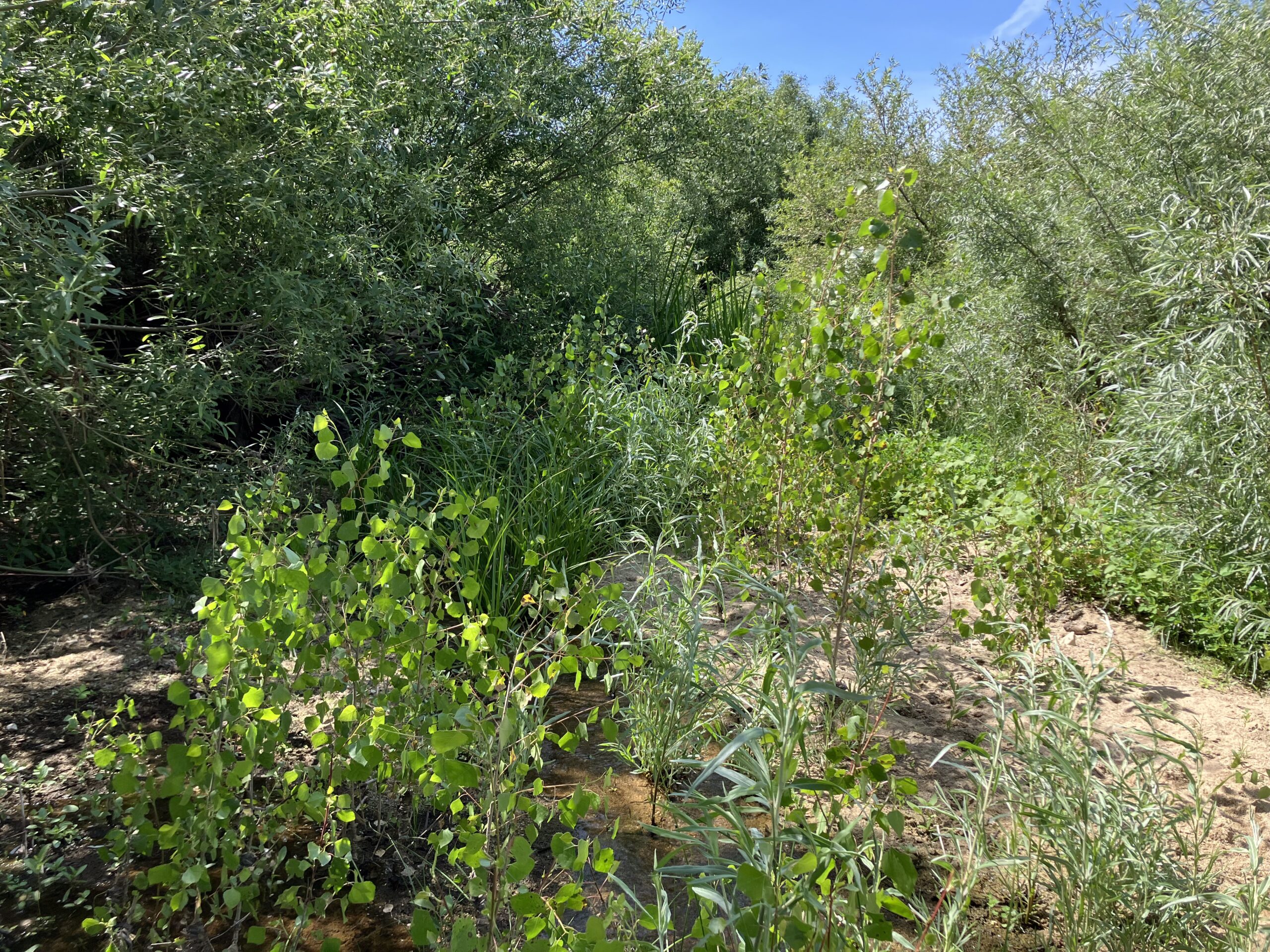

In addition to mature vegetation, I noticed new growth of cottonwood, arroyo willow, narrowleaf willow, mulefat, tule, and cattail—all being irrigated by the beavers!
Beavers create fish habitat
In this pond we primarily observed Sacramento suckers and Sacramento pikeminnow, two fish species native to the Salinas River.1
Beavers create additional depth in their ponds by digging on the river bottom. In the process, they create deep pools: ideal habitat for a variety of fish.
Want to see it for yourself?
The photos and videos really don’t do it justice. Join us on one of our upcoming Watery Walks to experience this incredible habitat for yourself!
- Sacramento pikeminnow are considered invasive in some nearby watersheds, including the Chorro Creek (Morro Bay) watershed. However, they are native to the Salinas River. Source: https://www.us-ltrcd.org/salinas-river-watershed-management-plan ↩︎