By Raine, Watershed Outreach & Education Coordinator
As I reach my last month working for the SLO Beaver Brigade, lots of reflections are coming up. I’m planning to move to Portland, Oregon, at the end of the summer—and while I’m excited to be making a big change in my life, it’s also bittersweet to be leaving such a beautiful organization and a beautiful place!
When I first started this job in January 2025, my motivation was simply to work alongside caring people in service of the land and the water. I had no idea just how much it would change my life and my perspective.

What does it take to restore a river?
This is a question I’ve been asking, in some form or another, for most of my life. Growing up I loved exploring Atascadero Creek and the Salinas River (although I didn’t know about the beaver habitat!). As a kid I used to wish I could do something to help keep the rivers and creeks from going dry, although I had no idea what that thing might be.
I started to get some answers to that question in 2019 when I joined the California Conservation Corps (CCC), where I participated in two programs: the Fisheries Program and the Watershed Stewards Program. I got hands-on experience in watershed education, biological monitoring, and native planting projects to restore riparian habitat for steelhead. A lifechanging lesson for me was that creek and river restoration can actually start anywhere on the land: restoring soil health and permeability through low-tech practices such as sheet mulching, bioswales, and native planting can significantly increase local groundwater recharge and reduce the amount of polluted runoff that enters our waterways.

Although I adored the work I did in the CCC, there was one aspect that I wished was different: most of my work was on restoration sites with no public access. After hours and hours spent caring for these places and developing a relationship with them, I couldn’t return to see how they were doing or bring my loved ones to enjoy them. Working for the SLO Beaver Brigade really drove home for me the importance of public access and community involvement in environmental stewardship.
Bring everyone you know
We are incredibly lucky in Atascadero to have ample public river access—a lot of towns don’t have this. It is such a joy to bring people out to beaver habitat, especially in the middle of summer, watch them light up with wonder, and then tell them that they can come back whenever they want, because it’s publicly accessible. In addition to hundreds of students and members of the public, I’ve gotten to bring friends and family out to the river to show them where I’ve been spending all my time and why I can’t stop talking about beavers. Some of them, who didn’t consider themselves to be very outdoorsy before, have even gotten to the point where they ask me if we can go visit the beaver ponds together. (I consider that to be my number one achievement, even though the beavers did all the work!)

Talking about beavers with my family also revealed some unexpected local history. The origins of our local beaver population are somewhat of a mystery—beavers were not a species of interest until very recently, so there is no coherent record of where they’ve historically resided in our county and for how long. Many people are under the impression that beavers have only recently returned to the watershed. To my surprise, when I told my dad and my uncle about my new job, they said that they used to see beavers on Atascadero Creek as kids in the mid-late 1960s! In their minds, this was no big secret; they’d simply never mentioned it before because I’d never asked.1
Keep coming back
If you’ve ever been on a Watery Walk with me, you may have heard me say that by far the best way to experience the magic of what beavers do is to visit the same spot again and again over time, so you can see how it transforms through the seasons. For me, it is a wonderful feeling to know that the beavers are there, day and night, taking care of the river for themselves and others. I love getting to visit the river a week or two after my last visit, asking myself with excitement, “What have the beavers been up to since I was last here? What kinds of changes and surprises will I see?”

Let it change you
Importantly, when we visit the river again and again, when we develop a real relationship with it, it gets woven into the fabric of our lives. We come to love it, and we want to work however we can to protect and restore it.
The North American beaver was almost completely wiped out during the Fur Rush, and then treated as a pest for decades, and only since 2023 has it been considered a species worth protecting here in California. Even now, beavers face challenges related to habitat degradation and climate change. Yet no matter how difficult the circumstances, beavers continue to do the work that is theirs to do, working tirelessly to keep water in our rivers and creeks. I think we humans are lucky to have the beaver as a role model and an inspiration that we can look to when we are feeling disempowered and at a loss for what to do.
My hope is that we will begin to reorient toward the river as the heart of our community, and to see and feel that we are always connected to the river and the creeks, no matter where we are on the landscape. Even as I leave Atascadero for new adventures, as I come to know and love a very different river and its beavers, I know that my connection to and gratitude for the Salinas River, our local beavers, and the dedicated group of humans that make up the SLO Beaver Brigade will continue to reverberate. Thank you to everyone who has been part of this beautiful experience.
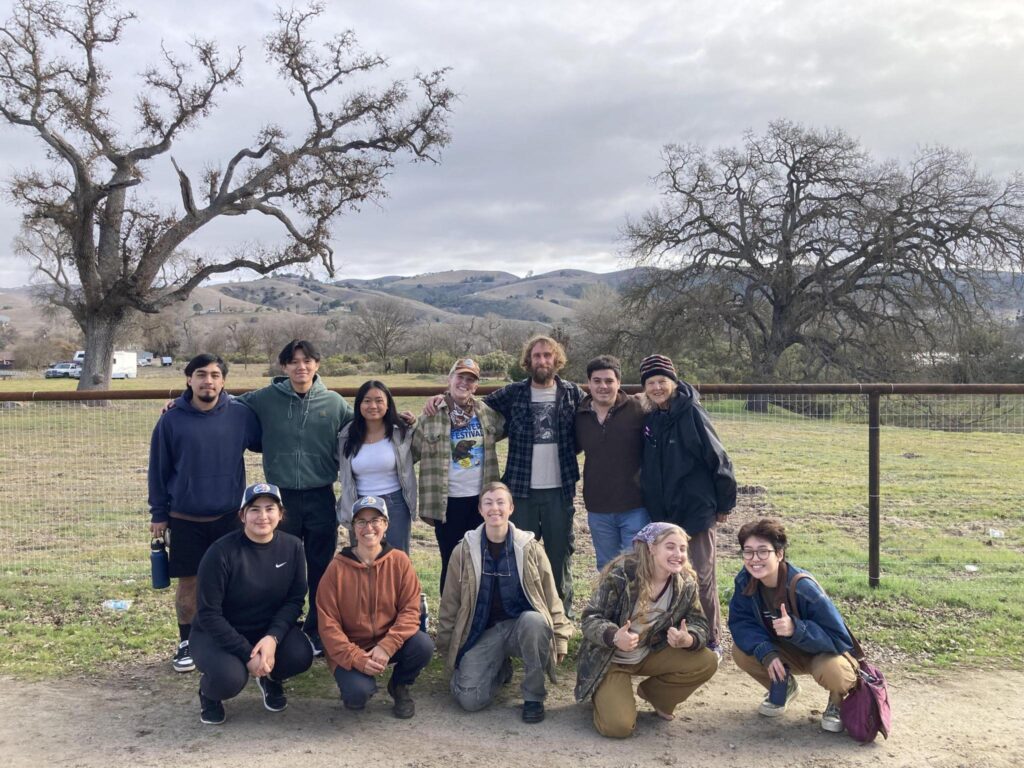
P.S. If you haven’t yet gotten involved with our work, now is the perfect time! Here’s how you can support:
- Join us at our upcoming Watery Walks and river cleanups
- Become a volunteer with our Beaver Dam Monitoring Program
- Book a private tour of beaver habitat
- Donate to support our work
- Collaborate with us on research, education, or restoration projects2
- The lesson here is that if you know people who have lived in the area for a while, ASK THEM ABOUT BEAVERS! Especially elders. They may have valuable historical and ecological knowledge that could contribute to our understanding of our local beaver population. We would love to hear from you—reach out to us at info@slobeaverbrigade.com to share your stories. ↩︎
- Contact us directly at info@slobeaverbrigade.com to share your ideas for possible collaborations on research, restoration, or education! ↩︎